Key Takeaways
- Rising Toll: Official reports confirm the death toll has climbed to 96, with dozens more still missing.
- Location: The disaster struck the remote Gofa Zone in Southern Ethiopia following relentless seasonal rains.
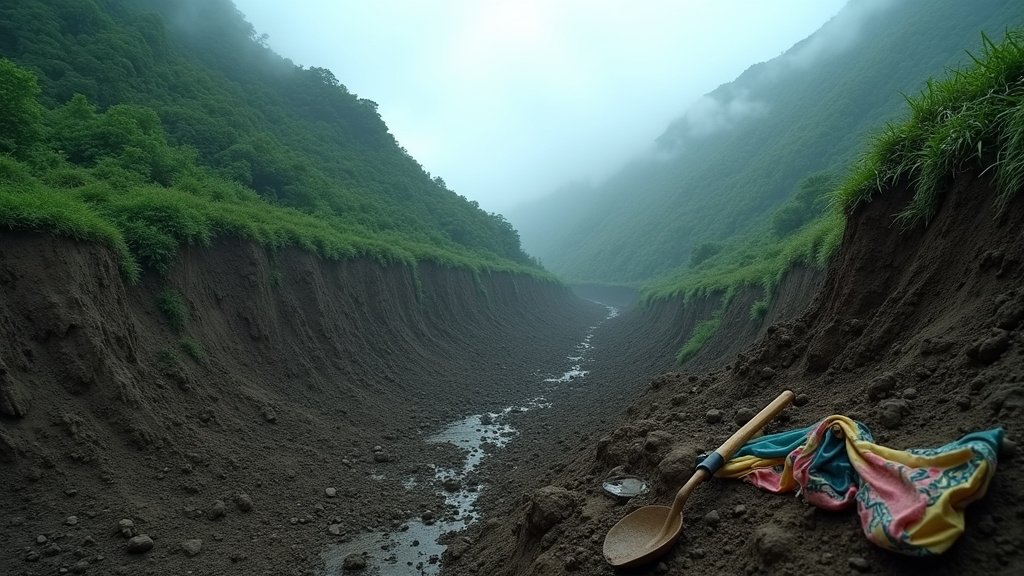
- Rescue Efforts: First responders and local volunteers are digging through thick mud using primitive tools and bare hands.
- Humanitarian Crisis: Over 1,000 people have been displaced, requiring immediate food, water, and medical assistance.
- Climate Warning: Experts point to increasingly volatile weather patterns in the Horn of Africa as a primary driver for these geological failures.
Summary Lead
The humanitarian crisis in Southern Ethiopia reached a grim milestone this week as authorities confirmed that at least 96 people have perished in a series of devastating landslides. The disaster, which occurred in the mountainous Gofa Zone, was triggered by exceptionally heavy rainfall that saturated the volcanic soil, causing entire hillsides to collapse onto residential settlements. As rescue efforts enter their most critical phase, the federal government and international aid agencies are racing against time to locate survivors buried beneath meters of debris.
The Deep Dive
A Community Under Mud
The Gofa Zone, known for its steep topography and agricultural reliance, has become the epicenter of a national tragedy. The landslides began in the early hours of the morning, catching many families while they slept. Initial reports suggested a lower casualty count, but as recovery teams reached more isolated hamlets, the scale of the destruction became apparent. Witnesses describe a ‘wall of earth’ that moved with such velocity that escape was impossible for those in its direct path.
Local administrative officials have noted that the geography of the region makes modern rescue operations nearly impossible. Heavy machinery is currently being transported from Addis Ababa, but the same rains that caused the slides have washed out the primary access roads. This has left the bulk of the recovery work to local villagers, who are working alongside the Ethiopian Red Cross in a desperate search for their neighbors.
The Impact of Extreme Weather
This latest catastrophe is not an isolated incident. Ethiopia has faced a grueling cycle of extreme weather over the last decade, oscillating between prolonged droughts and flash flooding. Climate scientists indicate that the Horn of Africa is experiencing heightened soil instability due to these rapid shifts. When heavy rains follow a dry spell, the parched, cracked earth cannot absorb moisture quickly enough, leading to the type of catastrophic runoff and soil liquefaction seen in Gofa.
The Ethiopian Disaster Risk Management Commission (EDRMC) has issued warnings to several other mountainous regions, urging residents to evacuate high-risk slopes. However, for many subsistence farmers, leaving their land is not a viable economic option, creating a cycle of vulnerability that often leads to high-fatality events during the monsoon seasons.
International and Local Response
Prime Minister Abiy Ahmed has expressed ‘profound sadness’ regarding the loss of life and has deployed federal security forces to assist in the logistics of the recovery. On the ground, the scene is one of grief and exhaustion. Temporary shelters have been erected in schools and community centers for the displaced, yet resources are being stretched thin.
International NGOs have begun mobilizing emergency kits, including plastic sheeting, water purification tablets, and high-energy biscuits. There is also a growing call for long-term geological surveys to map ‘red zones’ where human habitation should be permanently restricted to prevent future loss of life on this scale. As the sun sets on another day of searching, the focus remains on recovery, but the underlying fear of further landslides looms large as the rain continues to fall.
FAQ: People Also Ask
What caused the landslides in Ethiopia?
The primary cause was intense, prolonged seasonal rainfall hitting the mountainous Gofa Zone. This saturated the soil to the point of failure, causing massive sections of earth to slide down steep slopes onto villages.
How many people are still missing?
While the confirmed death toll stands at 96, local officials estimate that several dozen people remain unaccounted for. Rescue teams are continuing to dig through the debris, but the likelihood of finding survivors decreases with each passing hour.
What is being done to help the survivors?
The Ethiopian government and the Red Cross are providing emergency food and medical care. Displacement camps have been established to house over 1,000 people who lost their homes, and international aid organizations are beginning to deliver essential supplies.