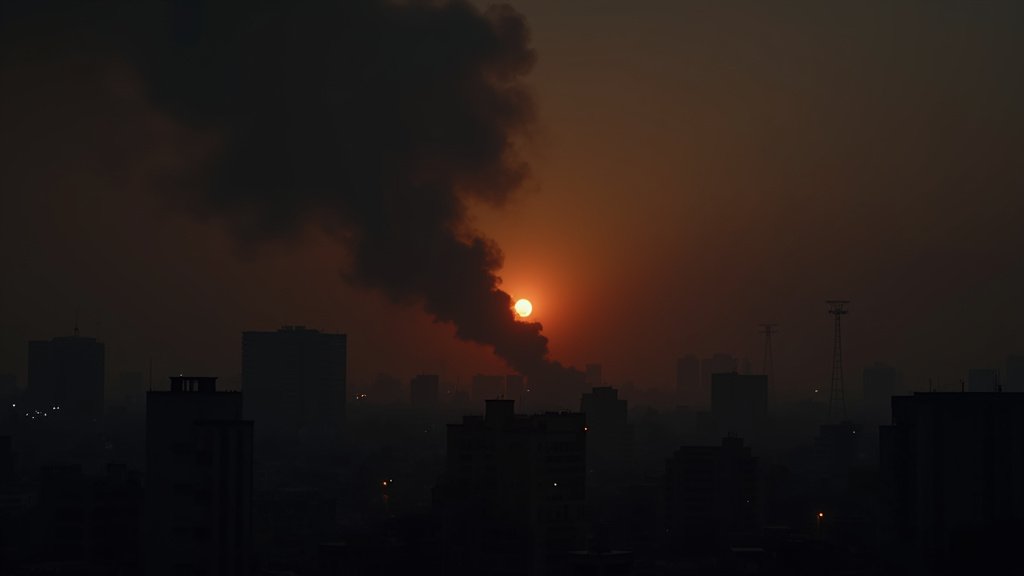
KABUL — The Afghan government confirmed today that Pakistan launched a series of aggressive airstrikes targeting the capital city of Kabul and several other critical provinces. Taliban government spokesperson Zabihullah Mujahid reported that the late-night bombardment struck residential areas and infrastructure, further shattering a fragile regional security landscape. This latest military action marks a significant intensification of what officials in Islamabad have previously termed an ‘open war’ against militant sanctuaries.
Key Takeaways
* Casualties in Kabul: At least four people were killed and 15 wounded in the capital after missiles struck residential zones.
* Multiple Provinces Targeted: Striking forces hit Kabul, Kandahar, Paktia, and Paktika provinces in a coordinated overnight operation.
* Infrastructure Damage: A private airline fuel depot belonging to Kam Air was reportedly destroyed near Kandahar airport.
* Retaliatory Cycle: These strikes follow weeks of border skirmishes and a failed mediation effort led by regional powers.
Pakistan Strikes Kabul: A Dangerous New Escalation
In a pre-dawn raid that shook the Afghan capital, Pakistani warplanes targeted multiple sites within the city and its outskirts. Local police spokesperson Khalid Zadran confirmed that the bombardment hit homes in Kabul, resulting in civilian casualties. This is the first time in recent weeks that the capital has faced direct aerial bombardment, signaling that the ‘strategic depth’ of the conflict has expanded beyond the volatile border regions.
According to the Taliban’s Ministry of Defense, the strikes were not limited to Kabul. Fighter jets also hammered targets in Kandahar, the spiritual heartland of the Taliban leadership, and the eastern provinces of Paktia and Paktika. In Kandahar, a fuel depot owned by the private carrier Kam Air was hit, causing a massive blaze that illuminated the night sky. The Afghan government has condemned the act as a flagrant violation of national sovereignty and a war crime against the Afghan people.
The Durand Line Crisis and Open War
This military surge is the latest chapter in the deteriorating relationship between Kabul and Islamabad. Pakistan’s government, led by Prime Minister Shehbaz Sharif, has repeatedly accused the Taliban of harboring Tehreek-e-Taliban Pakistan (TTP) militants. Islamabad claims these groups use Afghan soil to launch deadly terror attacks across the Durand Line. The Taliban continues to deny these allegations, insisting that they do not allow any group to use their territory for foreign aggression.
Following a series of border clashes in late February 2026, Pakistan formally declared a state of ‘open war’ through its Defense Ministry. Operation Ghazab-ul-Haq was launched with the stated goal of neutralizing TTP strongholds. However, the UN and various humanitarian organizations report that the brunt of the violence is being felt by civilians. Over 16,000 families have been displaced in the last month alone as villages along the frontier become active battlefields.
Humanitarian Impact and Global Response
The humanitarian toll of the ongoing conflict is reaching critical levels. The UN Office for the Coordination of Humanitarian Affairs (OCHA) warned that the displacement is compounding an existing crisis following the 2025 earthquakes. Airstrikes have damaged health facilities and humanitarian sites, including an emergency hospital at the Torkham border crossing. International observers fear that a full-scale war between the two nuclear-adjacent neighbors could destabilize the entire South Asian region.
Regional mediators, including China and Türkiye, have attempted to broker a lasting ceasefire. While a brief 48-hour pause was observed earlier this month, the strikes on March 13 indicate that diplomatic channels have completely collapsed. The Afghan Ministry of Defense has promised a ‘calculated and decisive’ response to the strikes, raising fears of a counter-offensive into Pakistani territory.
People Also Ask (FAQ)
Why is Pakistan striking Afghanistan?
Pakistan claims it is targeting Tehreek-e-Taliban Pakistan (TTP) militants who allegedly operate from sanctuaries within Afghanistan. Islamabad views these strikes as necessary for national security following a surge in domestic terror attacks.
What is the Taliban’s response to the airstrikes?
The Taliban government has officially denied harboring militants and condemned the strikes as a violation of international law. They have frequently retaliated with artillery fire and ground incursions along the border.
Has the international community intervened?
China, Türkiye, and Qatar have all offered to mediate the conflict. While some temporary ceasefires were achieved, they have consistently failed to hold due to the lack of trust between the two governments.