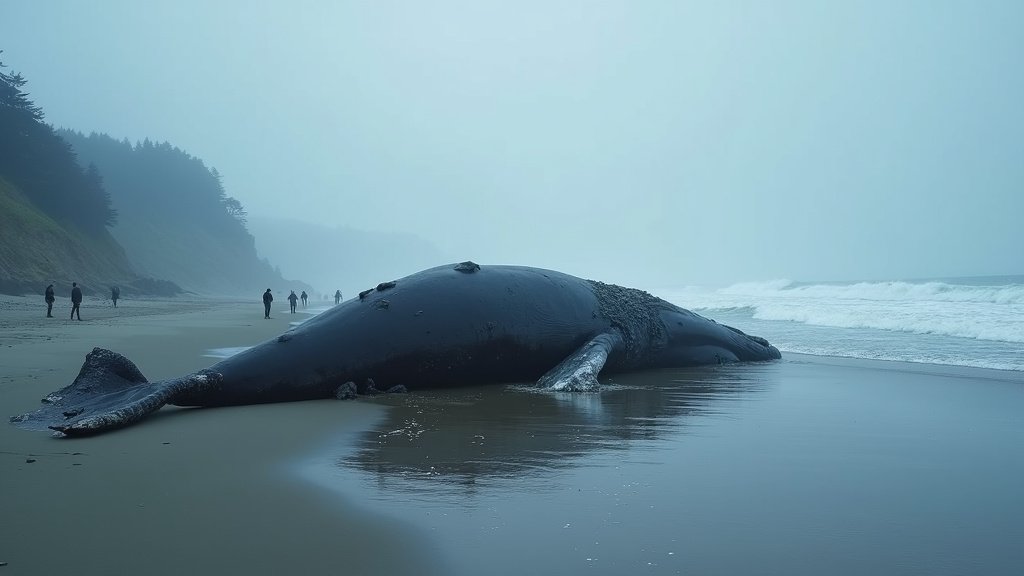
A 46-foot fin whale washed ashore on Sunset Beach, Oregon, on Saturday, February 7, 2026. The rare event drew onlookers. This news is a stark reminder of the ocean’s power. It also prompts scientific inquiry. Scientists plan a necropsy. They hope to learn the whale’s cause of death. This fin whale stranding is uncommon for Oregon. Only three fin whales have beached there in the last 24 years. Fin whales are the second largest whale species. They are only smaller than blue whales.
Discovery on the Oregon Coast
The massive creature came to rest on the sand north of Sunset Beach. The location is near Warrenton, Oregon. Seaside Aquarium officials noted the whale. It had been dead for some time before washing ashore. The whale was first spotted floating offshore. This happened days earlier, near Cape Falcon. High tides and currents eventually brought it to land. On Sunday, February 8, 2026, many people visited the beach. They came to see the rare sight. Onlookers described the scene as powerful. One visitor called it “force of nature.” Another said it was “just super wild.”
Understanding Fin Whales
Fin whales are impressive marine mammals. They are the second-largest whale species globally. Only blue whales are larger. Adult fin whales can reach up to 85 feet long. They can weigh as much as 80 tons. Their bodies are long and slender. They have a distinctive fin on their back. This gives them their name. Fin whales inhabit oceans worldwide. They prefer temperate and cool waters. Their diet includes small fish and krill. They are known for their speed. This earned them the nickname “greyhounds of the sea.” Commercial whaling greatly reduced their numbers. Today, vessel strikes are a major threat. They are listed as endangered.
Scientific Investigation Begins
Seaside Aquarium is involved in the investigation. They are coordinating with stranding networks. A necropsy is scheduled. This is an animal autopsy. It aims to determine the cause of death. Scientists hope to find answers. However, the whale had been dead for some time. This can make determining the cause difficult. The necropsy might reveal if a ship struck the whale. It can also check for other issues. A necropsy provides valuable data. It helps researchers understand whale health. It also sheds light on the marine ecosystem. The West Coast Marine Mammal Stranding Network often participates. This network is authorized by NOAA Fisheries. They respond to sick or dead marine mammals. Past necropsies have helped identify entanglements. Gear from Dungeness crabbing operations caused issues. These incidents have led to rule changes. The state of Oregon now has regulations. These reduce crab pot numbers. They also encourage shallower waters.
Public Reaction and Awareness
The sight of the large whale drew many people. Visitors expressed awe and wonder. “It’s fabulous,” said one observer. He noted seeing whales from afar. This was different. He could see the whale up close. Another visitor found it “amazing.” She had never seen anything like it. The event serves as a reminder. The Oregon coast is beautiful. It can also be a place of raw nature. However, officials urge caution. The Seaside Aquarium advised against touching the whale. Marine mammals can carry diseases. This risk exists even after death. People should admire from a distance. This incident highlights the ocean’s mysteries. It also underscores conservation needs.
Broader Context of Strandings
Whale strandings are not entirely uncommon. However, fin whale strandings are rare on the Oregon coast. Gray whales are seen more frequently. Fin whales live in deeper offshore waters. This makes them less likely to wash ashore. Other whale species do strand more often. Humpback whales have stranded recently. Some strandings are linked to fishing gear. Entanglement poses a significant threat. NOAA Fisheries works on solutions. They develop safer fishing practices. They also promote whale-safe shipping. Vessel strikes are another concern. These efforts aim to protect whale populations. The Oregon coast is a vital habitat. Protecting its marine life is crucial.
Looking Ahead
The fin whale’s story is sad. Yet, it offers a chance for learning. The necropsy will provide new data. This information aids conservation efforts. It helps us understand threats. It also informs protective measures. The ocean continues to reveal its secrets. This fin whale is one part of that story. The Oregon coast witnessed a rare event. It reminds us of nature’s scale. Further news will likely emerge. The scientific community will share findings. This news story captures a moment. It is a moment of awe and concern.