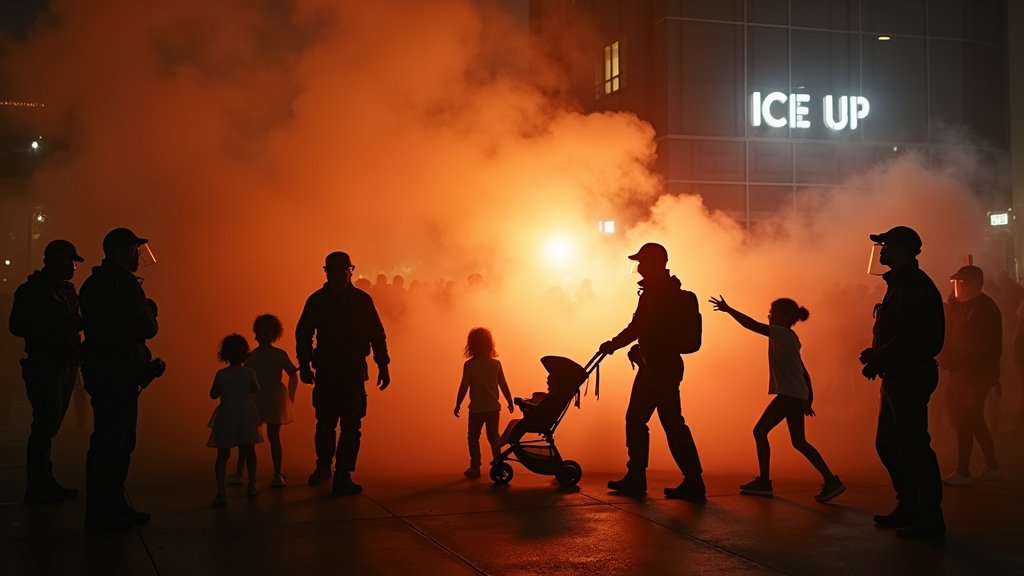
Federal agents unleashed tear gas. This happened in Portland, Oregon. They targeted peaceful protesters. Many families with young children were present. Portland Mayor Ted Wheeler reacted strongly. He demanded U.S. Immigration and Customs Enforcement (ICE) leave the city. This marks a severe escalation. It highlights deep divisions. The incident occurred at an ICE facility. Witnesses saw agents deploy tear gas. Pepper balls and rubber bullets were also used. The mayor condemned the agents’ actions. He stated they had lost legitimacy. They replaced it with shame. This news comes amid wider protests. They began in late May 2020. Protests followed George Floyd’s death. They aimed to address racial injustice. They also protested police brutality. Federal agents arrived in Portland in July 2020. President Trump ordered their deployment. Their mission was to protect federal property. This move was highly controversial. Local officials and residents opposed it. They saw it as an overreach. It fueled tensions further. The presence of federal agents intensified clashes. These agents were from various departments. They included Customs and Border Protection. They also included Homeland Security. Mayor Wheeler himself experienced tear gas. This happened on July 22, 2020. He was near the federal courthouse. He joined demonstrators. He urged federal agents to withdraw then. However, he was met with boos. Some protesters called for his resignation. They felt he had not done enough. He later described the agents’ presence as abhorrent. He called it beneath the city. The specific incident at the ICE facility amplified these concerns. Protesters gathered on a Saturday. Thousands marched for an “ICE Out” rally. They went to the South Waterfront facility. Witnesses described agents firing gas. They did so without warning. They fired at a crowd blocking the driveway. Parents tried to protect their children. Some used strollers and carts. Medical personnel treated affected individuals. The Portland Fire Bureau responded. They provided aid at the scene. This use of force drew sharp criticism. Oregon Governor Tina Kotek condemned the actions. She stated, “Trump’s ICE has no place in Oregon.” She called the tear gas use a “horrific abuse of authority.” She added it undermined public safety. It also violated constitutional rights. Oregon Attorney General Dan Rayfield also spoke out. He sent a cease-and-desist letter. It addressed federal excessive force. He cited reports of agents’ actions. These included incidents outside the ICE facility. The Justice Department faced pressure. Several Oregon Democrats in Congress requested an inquiry. The Inspectors General for DOJ and DHS launched investigations. They examined federal law enforcement’s response. They reviewed the use of force tactics. They looked into compliance with policies. This included the use of less-lethal munitions. The city of Portland also took action. Mayor Wheeler announced new measures. The city was moving to implement a fee. This fee targeted detention facilities using chemical agents. An ordinance enabling this took effect recently. Protests had occurred regularly. They targeted the ICE field office. This office is in Portland’s South Waterfront. Demonstrations have continued for months. They often involved civil disobedience. Some protests saw property damage. Others involved clashes with law enforcement. However, many participants maintained they were peaceful. They argued federal agents provoked violence. Federal authorities countered these claims. They described protesters as “violent anarchists.” They cited damage to federal property. They also mentioned attacks on officers. The legal battle over federal actions intensified. Lawsuits were filed against federal agents. These suits alleged excessive force. One lawsuit described federal conduct as excessive. It cited the tear gas infiltration of apartments. It asked for injunctions. These would bar tear gas use. It would exclude threats to officers’ lives. A federal judge had previously ruled against the Trump administration. The judge rejected the characterization of protests as lawless. She noted gatherings were “predominantly peaceful.” She barred National Guard deployment. The situation in Portland remained tense. The mayor’s demand for ICE to leave underscored this. It reflected a city pushing back. It pushed against federal authority. It pushed against federal tactics. The news coverage highlighted the ongoing conflict. It focused on civil liberties. It questioned government power. It showed a community seeking justice. The events sparked a national debate. They raised questions about federal roles. They questioned local control. The future of ICE operations in Oregon remained uncertain. The city sought accountability. It demanded an end to the use of force. The news from Portland continued to unfold. It told a story of resistance. It told a story of defiance.
Portland Mayor Demands ICE Exit After Federal Agents Deploy Tear Gas on Peaceful Protesters