Northwestern Scientists Unveil Groundbreaking Brain Interface Technology
A major leap in technology is here, showcasing the incredible potential of Brain Interface Technology. Northwestern University scientists have developed a new wireless device. This device “speaks” directly to the brain using light. It bypasses natural sensory pathways entirely, representing a significant medical technology breakthrough. This is exciting news for neuroscience. It offers vast potential for medical applications, further highlighting the importance of advanced Brain Interface Technology.
How the Device Works: An Introduction to Brain Interface Technology
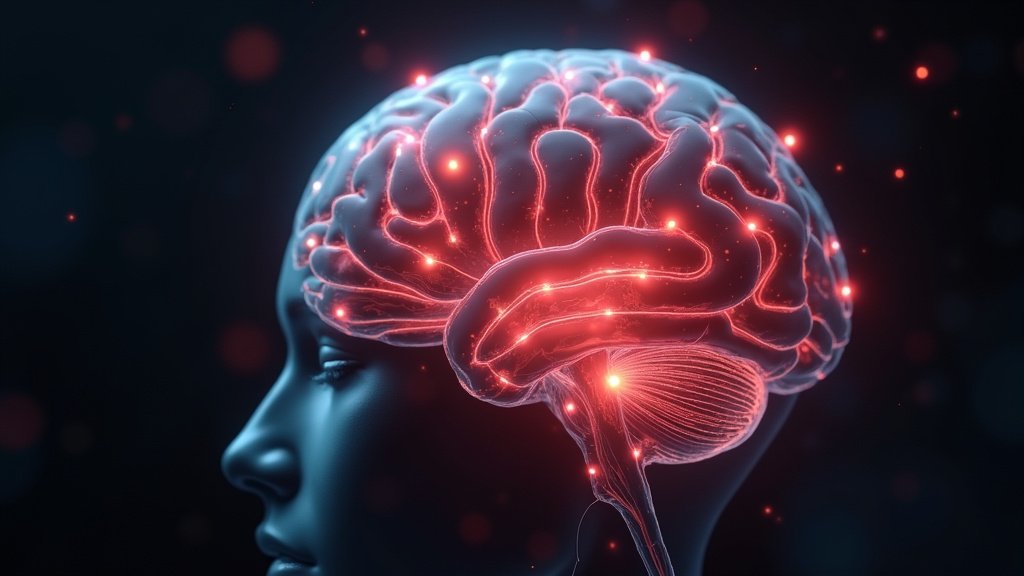
The implant is soft and flexible. It sits beneath the scalp. It rests just above the skull. The device then sends precise light patterns. These patterns travel through the skull. They activate specific neurons. This process uses optogenetics. Neurons must be genetically modified. They become responsive to light. The implant uses up to 64 micro-LEDs. This allows for complex signals. These signals mimic natural brain activity. This Brain Interface Technology is wireless. It requires no external wires. It is also battery-free and programmable. This makes it minimally invasive. Red light penetrates the skull well. It reaches neurons deep within the brain. This innovative approach to Brain Interface Technology is key.
Animals Learn New Artificial Sensations with Brain Interface Technology
Researchers tested the device in mice. These mice had light-responsive neurons. The animals learned to interpret the light signals. The patterns acted like secret codes. They received these codes directly in their brains. Even without sight, sound, or touch, they learned. The mice used this new information. They made decisions correctly. They completed behavioral tasks accurately. This shows the brain can learn new inputs. It can interpret artificial signals, a core concept in Brain Interface Technology. The learning speed was remarkable. This opens new doors for understanding perception and the possibilities within Brain Interface Technology.
Revolutionary Potential and Applications of Brain Interface Technology
This trending development has immense potential. It could restore lost senses. Think of vision or hearing prosthetics. It may provide sensory feedback for artificial limbs. This would make prosthetics more intuitive, a direct benefit of advanced Brain Interface Technology. The technology can also modulate pain. It offers an alternative to drugs. Rehabilitation after injury or stroke could improve. Controlling robotic limbs with the brain is also possible. It offers a window into how the brain processes information. Scientists can create new signals. They can then observe the brain’s response. This deepens our understanding of perception and the future of Brain Interface Technology.
Building on Past Innovations in Brain Interface Technology
This new device builds on earlier work. Northwestern researchers developed a similar device in 2021. That earlier implant used a single micro-LED. It allowed wireless programming of social behavior in mice. The new version significantly upgrades capabilities. It uses an array of 64 micro-LEDs. This allows for much richer patterns. It represents a significant step forward in Brain Interface Technology. It overcomes limitations of older, wired systems and demonstrates the evolution of Brain Interface Technology.
The Future of Brain-Light Communication and Brain Interface Technology
This breakthrough is truly significant neuroscience research news. It showcases a new era of brain-computer interfaces and advanced Brain Interface Technology. The technology is advancing rapidly. It moves beyond science fiction. This research offers hope for many conditions. Future versions may include more LEDs. They might use different light wavelengths. The goal is greater precision. This technology could transform healthcare. It promises to enhance human capabilities, showcasing the power of Brain Interface Technology. This trending innovation signals a bright future. It is a testament to scientific progress and the ongoing development of Brain Interface Technology.