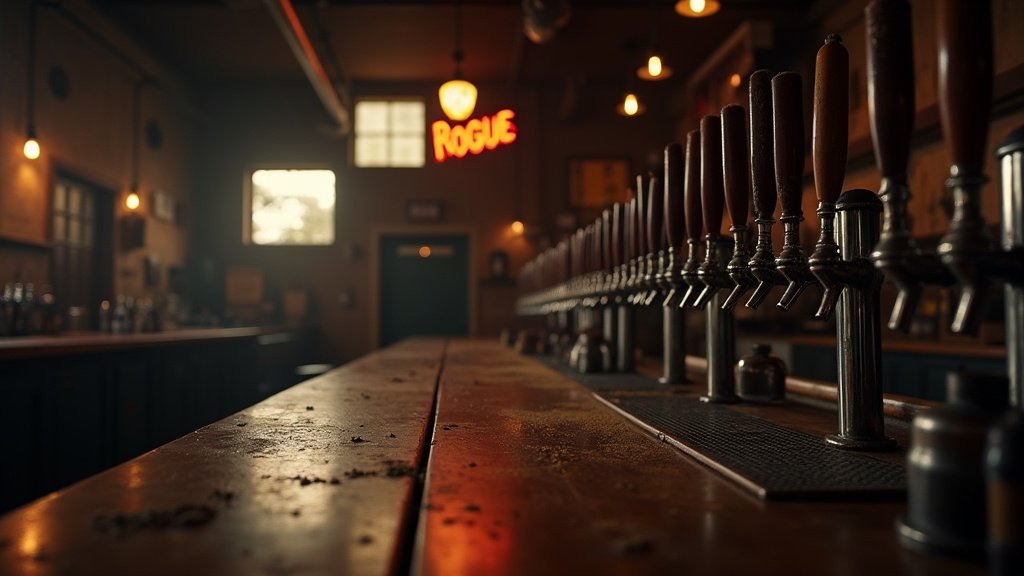
The substantial debts have led to Rogue Ales bankruptcy, marking the official cessation of operations for the iconic Oregon brewery. This reality struck on November 25, 2025, when its parent company, Oregon Brewing Company, filed for Chapter 7 bankruptcy, revealing Oregon brewery debt exceeding $16.7 million. The brewery’s closure, occurring just weeks prior, sent shockwaves through the craft beer industry, particularly within Oregon, highlighting the severe financial distress impacting the once-prominent entity and the broader craft beer market decline.
Rogue Ales Bankruptcy Filing and Brewery Debt Details
Oregon Brewing Company, the parent entity responsible for Rogue Ales, initiated the Rogue Ales bankruptcy proceedings due to overwhelming financial strain. The company reported assets valued at approximately $4.9 million against liabilities approaching $17 million. This considerable deficit necessitated the Chapter 7 bankruptcy filing, which mandates the liquidation of all assets, thus ending the business’s 37-year tenure as a significant fixture in Oregon’s beer landscape. The depth of the brewery debt is a central theme in the filings related to the Oregon brewery debt.
Understanding the Rogue Ales Bankruptcy and Oregon Brewery Debt
The comprehensive bankruptcy filings illuminate the extent of the financial obligations contributing to the Rogue Ales bankruptcy. A significant portion of the brewery debt stems from a contested $10 million claim by the Estate of Nancy Vickstrom, related to alleged “dram shop negligence.” The remaining $7 million in liabilities encompasses substantial, largely uncontested debts. Rogue Ales owed the Port of Newport over $594,000 in back rent. Lincoln County was also a major creditor, with the Tax Collector seeking more than $510,000 in unpaid taxes. Additionally, federal alcohol taxes amounted to $65,600. Financial institutions like Northrim Bank were owed $2.3 million. Key suppliers were also left unpaid, with Hopscroft seeking $865,000 and John I. Haas demanding $476,000. Even Rogue’s subsidiary, Yaquina Bay Beverage Company, was listed as a creditor for $361,000, alongside a $47,000 merchandise bill from Brewery Branding Company. The sheer scale of this brewery debt underscores the multifaceted challenges leading to the Rogue Ales bankruptcy.
The Sudden Rogue Ales Closure and its Industry Impact
The abrupt Rogue Ales closure on November 14, 2025, affected all its locations, including the Newport brewery and its associated pubs, leaving employees with minimal notice. This unexpected shutdown surprised many patrons and partners, impacting vendors and local relationships. These closures followed earlier downsizing efforts in 2020, which ultimately proved insufficient to avert the dire outcome of the Rogue Ales bankruptcy and the ongoing craft beer market decline.
Why Did Rogue Ales File for Bankruptcy?
The reasons behind the Rogue Ales bankruptcy extend beyond its internal financial management, reflecting broader challenges in the craft beer market. Declining sales, escalating competition, and shifting consumer preferences towards alternatives like seltzers, canned cocktails, and non-alcoholic beverages have intensified pressure on breweries. These craft beer market decline trends have contributed to a wave of closures across Oregon; the Oregon Brewers Guild reports that nearly 75 breweries have shuttered since the pandemic, with at least 35 closing in 2024 alone. Persistent inflation and supply chain disruptions have further escalated operational costs for brewers, creating an exceptionally challenging market environment that ultimately contributed to the Oregon brewery debt and subsequent Rogue Ales bankruptcy.
Rogue Ales Bankruptcy: A Legacy Dimmed by Oregon Brewery Debt
Established in 1988, Rogue Ales began its journey in Southern Oregon before relocating to Newport. It grew into a prominent name, with its flagship Dead Guy Ale achieving national recognition. The company also expanded into spirits, solidifying its position as one of Oregon’s most recognizable craft brewers, with products distributed across all 50 states and six pubs operating within the state. The impending liquidation of its assets under Chapter 7 now casts a shadow over its considerable legacy, marking a somber development for Oregon beer news and the craft beer industry at large, all stemming from profound Oregon brewery debt.
Conclusion on Rogue Ales Bankruptcy and Craft Beer Market Decline
The confirmation of the Rogue Ales bankruptcy signifies the definitive end for the historic brewery, overwhelmed by millions in debt. Its sudden Rogue Ales closure leaves a palpable void and serves as a stark testament to the intense competition and evolving dynamics within the craft beer market. The challenges faced by Rogue Ales reflect broader industry pressures, including the pervasive craft beer market decline, and the future for remaining Oregon breweries remains a subject of concern, as this news marks the conclusion of a significant era in craft beer and the outcome of the Oregon Brewing Company’s financial woes. This Chapter 7 filing is a critical event in Oregon beer news.